Icebreaker activities can work wonders in the classroom. They can be great for both getting to know students and encouraging camaraderie. Plus, they can be perfect for giving you something to do when you have an extra 5-10 minutes to fill at the end of class. Yet, not all icebreakers will be well received by teenagers.
A lot of the games or activities out there are created for younger kids, and they just come off boring to teenagers. So to help you cut through the good, bad, and boring, we talked directly to high school students who have been through their fair share of icebreakers over the years. Here are activities they said they’d do again and again.
1. Bond over ways you’re all alike
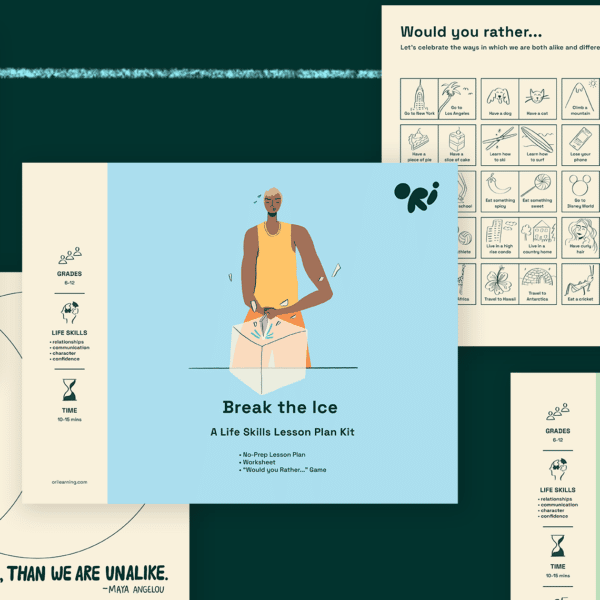
It’s easy to find ways we’re all different, but it’s good practice to find ways we’re alike as well. In this quick Life Skills Lesson Plan (15 minutes or less), you’ll be able to unpack a quick lesson with students in which they learn to look for and embrace similarities. The accompanying activity for the lesson plan encourages students to gather in small groups and find a way they are all similar. Then it encourages them to celebrate differences as well. It’s a quick and easy way to get students talking and connecting with one another.
2. Play icebreaker BINGO
BINGO is a classic, and it’s perfect to pull out for an icebreaker activity. You can find plenty of printable BINGO board options online—or you can also get an entire set of free ones here. With this, students will go around mingling with other classmates to try to fill their board. They’ll learn a lot about one another in a matter of minutes. The printable boards here have many different options, so no two games or boards are the same. You decide whether you want them to collect a BINGO after one line or if you want them to try to fill out the entire sheet.
3. Try the ABCs game
If you need an icebreaker activity that’s really quick and easy, then consider the ABC game. This one is probably the friendliest on the list as far as being really general. It’s all about striking up a conversation and thinking quickly on your feet. It’s not necessarily about learning about a person’s hobbies or interests, which isn’t a bad thing. (Sometimes you need to start with the basics of just getting students comfortable talking and interacting with one another.) With it, you pair students up (small groups can work well, too), and you have students select a topic or subject. Then they just roll through the alphabet, listing off items that fit. It’s a simple, straightforward game that anyone can play. It gets students talking and interacting. Many teachers say it works well as a warm-up activity for a deeper “getting to know you” kind of activity.
No Place in Your Schedule for Emotional and Personal Skills?
4. Ask “Would you rather?” questions
Would You Rather is such a good way to pull people into a game or conversation because you can’t help but think about what answer you’d select each time. Asking these types of questions can work well in both small, partner settings and in big groups. In fact, it’s a great way to find commonalities in large groups. Students who never thought they’d have something in common will definitely find some similarities when playing a big game of Would You Rather. This is another one where you can find plenty of Would You Rather questions and printables online. If you’d like to have some vetted and ready for the classroom list, be sure to pull them from the Life Skill Lesson.
5. Let students decide
When students have a say in the activity, they’re much more likely to be invested in it. Or when they have an opportunity to vote on something and choose between multiple options, that also works well. So put it to the test. Ask students to come up with ideas for Icebreaker activities. Collect them all during one class period, and then pull together the top options. Let students vote or just go in order, tackling one after another. You might just discover a new favorite. Plus, students will appreciate the fact that you cared enough to ask them for suggestions. At least, that’s the hope. These are teenagers after all, so you might also have to threaten them with a really boring activity first before they give you better, creative options. Good luck and have fun!
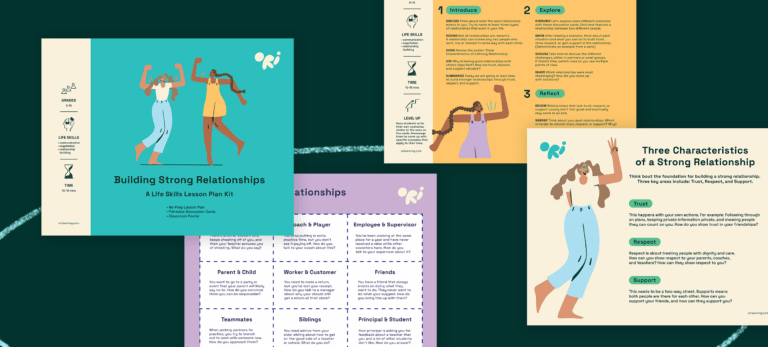
Help teens understand the importance of trust, respect and support in building rapport with a parent, coach, or teacher using this free lesson plan.
Icebreaker activities for teens: Next steps
Selecting the right icebreaker activities can significantly enhance a teenager’s classroom experience. By incorporating interactive and enjoyable games, educators can captivate their students while promoting meaningful interactions. Furthermore, allowing students to have a say in choosing the activities not only boosts their enthusiasm for learning, but also ensures that the icebreakers resonate well with their interests and preferences. With these thoughtful strategies, teachers can turn any mundane moment into an opportunity for lively and constructive social learning.
Ori Learning’s Emotional Well-Being curriculum provides a simple yet powerful framework for nurturing students’ emotional intelligence, social skills, and overall well-being. By understanding what emotional well-being is and the benefits it provides, educators can create a supportive and inclusive learning environment that benefits students academically, emotionally, and socially. The integration of emotional well-being into educational settings offers numerous advantages, including improved academic performance, the development of essential life skills, the fostering of positive relationships, and the promotion of a positive classroom climate.