Integrating Social and Personal Competencies into Your Texas MTSS Framework
Last updated: March 2026
Texas districts are building Multi-Tiered Systems of Support that go beyond academics. The Texas Education Agency defines MTSS as “an integrated framework for the systemic alignment of evidence-based prevention and intervention practices to support all the needs of all students” — and increasingly, that means addressing social, personal, and emotional competencies alongside reading and math.
Education Service Centers across Texas — the primary providers of MTSS professional development for districts — are beginning to embed social and personal competencies as a core component of multi-tiered support. This is a recent and still-emerging shift that most districts have not yet encountered. The practical questions are immediate: how do you deliver consistent competency instruction across campuses, document it for compliance, and connect it to the rest of your tiered support system?
Understanding the Texas MTSS Framework
MTSS in Texas takes a whole-child approach. While many Texas MTSS resources focus on accelerated academic intervention — especially after HB 1416 established requirements for students not meeting STAAR benchmarks — TEA’s MTSS vision has always been broader. The framework encompasses academic, behavioral, mental health, and wellness needs across three tiers of support.
The TEA-funded TIER Project — now housed at spedsupport.tea.texas.gov — provides free MTSS training through regional Education Service Centers. The project offers six training pathways, all approved for Continuing Professional Education (CPE) credit:
- MTSS Introduction Module — 6 foundational pathways covering the multi-tiered framework
- MTSS Leadership Module — 6 advanced pathways for campus and district leaders
- Screening Module — interpreting universal screening data for tier placement
- Behavior Module — evidence-based behavior practices within MTSS
- Mental Health Module — supporting student mental health within MTSS, including social and personal competencies
- Additional resources — MTSS Myth Busters, co-teaching arrangements, daily intervention dosage logs, and workshop materials
These free resources give Texas districts a strong foundation for building systems that serve the whole child, not just academic performance — and the mental health module specifically addresses the social and personal competency instruction that fits within Tier 1.
Texas frames the non-academic components differently than most states. Rather than adopting a single national label, Texas has developed its own policy language around personal skills, character education, and mental health competencies — all of which fit within the MTSS structure.
The Terminology Shift: Social and Personal Competencies in Texas
Nationally, educators searching for student support within tiered frameworks use various national terms. In Texas, however, the policy language has moved in a different direction — and understanding this shift matters for district leaders making curriculum decisions.
During the 87th Legislative Session, SB 123 added new requirements to existing character education law. The original draft referred to “social and emotional skills,” but the final bill deliberately settled on “personal skills” — adding self-management, interpersonal skills, social awareness, responsible decision-making, and self-awareness to the character traits already required under TEC §29.906 and TEKS Chapter 120.
That wording was deliberate. The final bill frames these competencies as personal development and character building rather than relying on nationally debated terminology. For districts, the practical result is the same — students still learn to manage emotions, build relationships, and make responsible decisions — but the language aligns with Texas policy.
We use “social and personal competencies” throughout as a practical umbrella for the personal skills, character-development, and wellness competencies districts address within MTSS. It captures the skills Texas law requires, reflects the personal-development framing the state prefers.
Where Social and Personal Competencies Fit Across MTSS Tiers
Tier 1: Universal Instruction and Prevention
According to the Texas School Mental Health framework, Tier 1 universal supports include student well-being skills instruction, character education, behavioral expectations, positive reinforcement, restorative practices, mental health literacy, community building, and prevention programs addressing bullying, suicide, and substance use.
Structured curriculum makes the biggest difference at Tier 1. A consistent Tier 1 program ensures every student in grades 6–12 receives explicit instruction in competencies like self-awareness, emotion regulation, and responsible decision-making — the same personal skills required under Texas law. Strong Tier 1 instruction is intended to reduce the number of students who need more intensive Tier 2 and Tier 3 supports, easing the burden on counselors and intervention teams.
For districts implementing MTSS programs for schools, the key is choosing curriculum that is evidence-based, age-appropriate for secondary students, and structured enough to deliver with fidelity across multiple campuses. It also needs to generate data — informed tier placement decisions depend on having baseline and progress measures from Tier 1.
Texas MTSS coordinators are often managing systems built primarily around academic intervention and STAAR remediation. Adding a social-personal competency layer means the curriculum has to fit into time that’s already spoken for — advisory periods, flex blocks, or intervention pullouts — not require new schedule space. That’s the practical barrier most districts hit first: not whether to teach these competencies, but where in the day it actually happens.
Tier 2: Targeted Supports
Some students will need more than universal instruction. Tier 2 provides targeted, small-group interventions for students showing skill gaps or behavioral concerns identified through Tier 1 screening and progress data. In Texas, districts should be aware that TEC §26.0081 requires parental notification when a student not receiving special education services begins receiving intervention strategies at Tier 2 or Tier 3. Notices must be provided in English or the parent’s native language.
Effective MTSS curriculum at Tier 1 supports this transition by providing the assessment data needed to identify which students need targeted intervention and in which specific competency areas — whether that is self-management, relationship skills, decision-making, or understanding how competency instruction fits alongside broader behavior frameworks like PBIS.
Tier 3: Intensive, Individualized Supports
Tier 3 serves students with significant or persistent needs through individualized intervention plans, often coordinated with school mental health services, functional behavior assessments, and crisis response systems. While Tier 3 typically involves specialized providers, a strong Tier 1 foundation means fewer students reach this level — and those who do have documented data showing how they responded to universal and targeted instruction.
Texas Policy and Compliance Considerations
District administrators building MTSS systems for social and personal competencies need to account for several Texas-specific requirements.
TEC §38.351 connects schools to evidence-based training and programming related to skills such as managing emotions, establishing positive relationships, and responsible decision-making — competencies that align directly with Tier 1 MTSS instruction. The Health and Human Services Commission coordinates with TEA to maintain a list of recommended evidence-based programs for mental health promotion and intervention.
TEC §48.009(b)(4) requires annual PEIMS reporting of students receiving intervention strategies. Districts need systems that can document which students are receiving supports at each tier and track their progress over time — making curriculum with built-in assessment and reporting capabilities especially useful for supporting PEIMS documentation workflows.
SB 123 and TEC §29.906 establish that schools must provide instruction in character traits and personal skills including self-awareness, self-management, social awareness, interpersonal skills, and responsible decision-making. Districts using MTSS can integrate these requirements directly into Tier 1 universal instruction rather than treating them as separate compliance obligations.
Funding Social and Personal Competency Supports in Texas
Two primary funding pathways are available for Texas districts looking to implement MTSS curriculum focused on social and personal competencies.
Coordinated Early Intervening Services (CEIS) funds can be used for students not yet identified as needing special education services, particularly in early grades. These funds are specifically designed to support prevention-oriented programs that reduce the need for more intensive intervention.
The School Safety Allotment provides annual funding that can legally be used for mental health personnel, programming, and behavioral health services. As of 2025-26, districts receive $21.10 per student (ADA) plus $33,540 per campus — more than double the previous amounts of $10/ADA and $15,000/campus. The increase was enacted by HB 2 during the 89th Legislative Session. However, most districts have historically directed these funds toward physical security: TEA’s first School Safety Allotment report showed that only 1.4% was used for mental health in FY23. For a mid-sized district of 5,000 students across 8 campuses, the allotment now totals approximately $374,000 — a significant resource that district leaders can strategically direct toward Tier 1 wellness and competency instruction.
Districts should also explore Title IV-A allocations for safe and healthy students and local wellness program budgets when building the funding case for MTSS curriculum adoption.
Tier-by-Tier Curriculum Support Within Texas MTSS
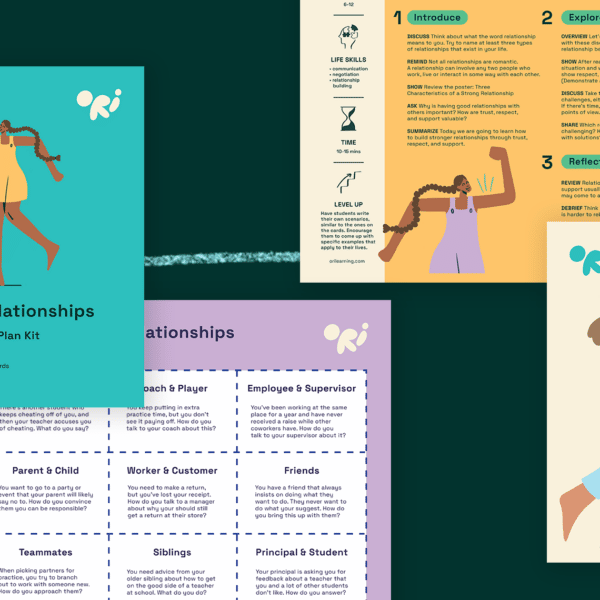
Ori Learning’s Emotional Well-Being Curriculum is designed specifically for grades 6–12 and maps directly to the three tiers of support Texas districts need within their MTSS framework.
MTSS Tier Alignment
- Tier 1 — Universal Instruction: 175 structured lessons across five units deliver consistent competency instruction to every student. Lessons include warm-up activities and exit tickets that provide baseline screening data, giving MTSS teams the foundation they need for informed tier placement.
- Tier 2 — Targeted Small-Group Intervention: Self-paced delivery mode allows counselors and intervention specialists to assign specific lessons or units to small groups, targeting the exact competency areas where students show gaps — without requiring a teacher-led session.
- Tier 3 — Intensive Individual Support: Individual student progress data — completion rates, assessment scores, and response patterns — feeds directly into intensive support planning, documenting how a student responded to Tier 1 and Tier 2 instruction.
In a third-party study following ESSA Level III standards, 1,829 high school students using the curriculum during the 2023–24 school year showed statistically significant gains: students who completed all 25 lessons scored 11% higher on emotional well-being measures than those completing only five (Hunt & Styers, 2025). For MTSS teams, that dose-response data provides Tier 1 evidence that supports the entire prevention-to-intervention logic model.
Features Most Relevant to Texas Districts
- Assessment and documentation: Pre- and post-assessments at the lesson and unit level support PEIMS documentation workflows and help MTSS teams track progress across tiers.
- District dashboards: Campus and district-level reporting allows leadership to monitor implementation fidelity and aggregate outcomes across schools — essential for districts managing MTSS at scale.
- Flexible delivery: Three modes — front-of-class instruction, live participation, and self-paced — fit advisory periods, health classes, dedicated blocks, or intervention pullouts.
- 130+ language translations with text-to-speech and speech-to-text support Texas’s multilingual student populations and students requiring accommodations.
Crosswalk: Ori Learning Units to Texas Requirements and MTSS Tiers
| Ori Learning Unit | TEC §29.906 Personal Skills | TEC §38.351 Competencies | MTSS Tier Alignment |
|---|---|---|---|
| Self-Awareness | Self-awareness; integrity; honesty | Managing emotions | Tier 1 universal; Tier 2 targeted for students with limited self-insight |
| Self-Management | Self-management; responsibility; perseverance; self-control | Managing emotions | Tier 1 universal; Tier 2/3 for students with emotion regulation needs |
| Social Awareness | Social awareness; caring; empathy; compassion | Establishing positive relationships | Tier 1 universal; Tier 2 for social skill gaps |
| Relationship Skills | Interpersonal skills; courtesy; cooperation; good citizenship | Establishing and maintaining positive relationships | Tier 1 universal; Tier 2 for conflict resolution or peer relationship concerns |
| Responsible Decision-Making | Responsible decision-making; accountability; fairness | Responsible decision-making | Tier 1 universal; Tier 2/3 for students with behavioral decision-making patterns |
See how Ori Learning can support your Texas MTSS strategy →
Building a Practical District Strategy
For districts building out competency instruction within MTSS, a practical starting point:
- Define your district terminology. Align language with Texas policy — “personal skills,” “character education,” and “social and personal competencies” rather than nationally contested terms. This simplifies board presentations and parent communication.
- Map Tier 1 expectations. Identify which competencies your Tier 1 instruction must cover based on TEC §29.906, TEC §38.351, and your district’s strategic plan.
- Select curriculum with data capabilities. Your Tier 1 program needs to generate assessment data that feeds into Tier 2/3 placement decisions. Without this, the social-personal side of your MTSS lacks a strong data foundation.
- Align funding. Review School Safety Allotment usage ($21.10/ADA and $33,540/campus as of 2025-26), CEIS eligibility, Title IV-A allocations, and local wellness budgets. Build the case that Tier 1 prevention programming reduces demand for costlier Tier 2/3 interventions.
- Leverage free TEA resources. The TIER Project’s free CPE-approved training modules — especially the MTSS Introduction, Leadership, and Mental Health pathways — and regional ESC support can supplement your implementation without additional cost.
- Monitor and adjust. Use Tier 1 assessment data to identify students needing targeted support, document interventions for PEIMS compliance, and refine your approach each semester.
What Texas MTSS Coordinators Should Evaluate in a Competency Curriculum
Texas MTSS coordinators selecting a competency curriculum should press vendors on several practical questions:
- Tier-ready data infrastructure — Does the program generate baseline screening data and ongoing progress measures that feed directly into tier placement decisions? Without assessment data from Tier 1, your MTSS team is making Tier 2/3 referrals based on teacher observation alone.
- Alignment to TEC §29.906 personal skills and TEC §38.351 competencies — Does the curriculum explicitly address the competencies Texas law requires: self-awareness, self-management, social awareness, interpersonal skills, and responsible decision-making? Ask for a crosswalk, not just a general alignment claim.
- Secondary-specific content (grades 6–12) — Many competency programs were designed for elementary students and retrofitted upward. Texas secondary students need age-appropriate scenarios, activities, and language — not adapted K-5 content.
- Flexible delivery across MTSS contexts — Can the same curriculum serve advisory-period Tier 1 instruction, small-group Tier 2 intervention, and individual Tier 3 support without requiring three separate programs? Districts managing MTSS at scale need one platform that flexes across tiers.
- PEIMS-compatible documentation — TEC §48.009(b)(4) requires annual reporting of students receiving intervention strategies. Does the platform track which students receive which supports and generate exportable records that simplify PEIMS compliance?
- Parent notification support — TEC §26.0081 requires parent notification for Tier 2/3 interventions. Does the program’s data system make it clear when a student transitions between tiers, so your notification process is triggered at the right time?
Frequently Asked Questions
What is Texas MTSS?
Texas MTSS (Multi-Tiered System of Supports) is an integrated framework that aligns evidence-based prevention and intervention practices to address all student needs. It uses a three-tier structure — universal instruction for all students, targeted support for some, and intensive intervention for a few — across academic, behavioral, mental health, and wellness domains. The TEA-funded TIER Project provides free CPE-approved implementation training through regional Education Service Centers, including six training pathways covering introduction, leadership, screening, behavior, and mental health.
How do social and personal competencies fit into Texas MTSS?
Social and personal competencies — including self-awareness, self-management, social awareness, relationship skills, and responsible decision-making — are part of Tier 1 universal supports within Texas MTSS. The Texas School Mental Health framework identifies these as core components of Tier 1 instruction alongside character education, behavioral expectations, and prevention programming. Strong Tier 1 competency instruction reduces the need for more intensive Tier 2 and Tier 3 interventions.
Why does Texas use “personal skills” instead of “social and emotional skills”?
During the 87th Legislative Session, SB 123 added competency requirements to Texas character education law. The original bill draft used “social and emotional skills,” but the final version adopted “personal skills” — a deliberate choice that frames these competencies as personal development and character building. The required skills (self-management, interpersonal skills, social awareness, responsible decision-making, and self-awareness) are substantively similar to national frameworks, but the Texas terminology avoids politically contested language.
Can Texas districts use the School Safety Allotment for MTSS curriculum?
Yes. The School Safety Allotment can fund mental health personnel, programming, and behavioral health services — which includes Tier 1 curriculum that teaches social and personal competencies. As of 2025-26, districts receive $21.10 per ADA and $33,540 per campus (increased by HB 2 during the 89th Legislature). In FY23, only 1.4% of School Safety Allotment funds statewide were used for mental health, suggesting significant untapped funding for districts that want to invest in prevention-oriented wellness instruction.
Are Texas districts required to notify parents about Tier 2 and Tier 3 MTSS interventions?
Yes. TEC §26.0081 requires that parents be notified when their child begins receiving intervention strategies at Tier 2 or Tier 3, provided the student is not already receiving special education services. The notification must be provided in English or the parent’s native language. TEA provides a sample parent notification form on its MTSS page. Districts should build clear communication processes into their MTSS implementation plans to meet this requirement.
For more on how Ori Learning supports Texas districts, explore the Emotional Well-Being Curriculum.