Last updated: March 2026
California has been at the forefront of integrating social-emotional learning into public education for over a decade. For district leaders evaluating a California SEL curriculum, that matters — the state’s funding structures and whole-child priorities create a clearer path to implementation than most states offer.
But state-level commitment does not automatically translate into effective classroom instruction. Many California districts still face the same challenges that complicate SEL implementation nationwide: finding a California SEL curriculum that actually works for secondary students, supporting the state’s diverse student population across dozens of languages, and building sustainable programs now that federal emergency funding has expired.
Why California Schools Need a Strong SEL Curriculum for Grades 6–12
California uses SEL language openly at the state level — and funds it. The California Department of Education maintains a Social and Emotional Learning initiative page providing guidance on implementation, assessment, and alignment with state priorities. As a CASEL Collaborating States Initiative partner, California signals that SEL is not a passing trend but a sustained institutional commitment.
The state has also moved beyond voluntary guidance. SB 224, signed into law in 2021, mandates mental health instruction in middle and high school health courses — including protective factors such as positive development, social connectedness, resiliency, problem-solving, coping skills, and self-esteem. These overlap directly with SEL competencies, giving districts a legislative mandate that supports dedicated social-emotional instruction at secondary grades.
Yet secondary-specific SEL remains a gap. Most available programs were built for elementary classrooms and retrofitted upward. This shows up consistently in California pilot reviews: advisory teachers report that secondary students immediately tune out when presented with curriculum that feels like it was designed for younger grades. California’s middle and high school students need curriculum designed for their developmental stage. Recycled elementary content with a new label doesn’t hold up when students are navigating identity questions, peer conflict, and real mental health pressure.
How California Defines SEL
California Department of Education SEL Guidance
California does not have standalone SEL standards in the way it has mathematics or English language arts standards. Instead, social-emotional learning is woven into multiple existing frameworks and guidance documents — each of which carries implications for how districts select and implement SEL programs. The CDE’s SEL resources provide a foundation that districts reference when designing their Local Control and Accountability Plans (LCAPs), particularly around State Priority 5 (Pupil Engagement) and Priority 6 (School Climate).
California Transformative SEL Competencies
The CDE has developed Transformative SEL Competencies that build on the five CASEL competencies — self-awareness, self-management, social awareness, relationship skills, and responsible decision-making — while adding an explicit equity lens. California Transformative SEL asks students to examine how identity, belonging, and social context shape their social-emotional experiences and the experiences of others.
For districts, the practical question is whether a CASEL-aligned curriculum can support T-SEL goals. The CASEL foundation — identity exploration, perspective-taking, empathy, collaborative problem-solving — provides the instructional core that T-SEL builds on. A curriculum that teaches these competencies well gives districts the foundation to extend into T-SEL’s broader dimensions as their implementation matures.
Where SEL Shows Up in California Standards and Frameworks
2019 Health Education Framework
California’s 2019 Health Education Framework designates “Mental, Emotional, and Social Health” as one of its six content areas. The framework provides grade-band expectations for what students should know and be able to do in the social-emotional domain — from understanding emotions and building healthy relationships in elementary grades to navigating identity, stress management, and responsible decision-making in secondary school.
For district leaders evaluating SEL programs, the Health Education Framework creates a natural alignment pathway. An SEL curriculum that maps to these content expectations can serve double duty — supporting health education goals while delivering dedicated social-emotional instruction. In California secondary schools, where schedule time is fought over by every department, a program that satisfies both sets of requirements has a real advantage in the adoption conversation.
MTSS and the Broader SEL Continuum
California has recognized social-emotional development across the full K–12 spectrum. The state’s Preschool Learning Foundations established early benchmarks for social-emotional competencies, and subsequent frameworks carry these developmental expectations through elementary and into secondary grades. This continuum means that by the time students reach middle school, they should be building on foundational skills — not encountering SEL for the first time.
California’s Multi-Tiered System of Supports (MTSS) framework reinforces this continuum by positioning SEL as a Tier 1 universal support. The CDE describes MTSS as “an integrated, comprehensive framework for LEAs that aligns academic, behavioral, and social-emotional learning” — signaling that structured social-emotional instruction belongs in every school’s support system — not reserved for students already identified as at-risk.
Funding a California SEL Curriculum
California offers more SEL-eligible funding pathways than almost any other state. With federal ESSER funds now expired, district leaders need sustainable sources. The programs below represent over $15 billion in total funding that can support SEL curriculum adoption, implementation, and ongoing delivery.
LCFF: The Primary Sustainable Funding Source
The Local Control Funding Formula (LCFF) is how most California districts fund SEL. LCFF provides broad spending flexibility through three components: uniform base grants by grade span, Supplemental grants (20% of adjusted base for English learners, foster youth, and low-income students), and Concentration grants (65% of adjusted base when these populations exceed 55% of enrollment). Districts can direct LCFF funds toward SEL curriculum, professional development, and implementation support without applying for separate grants.
The connection between LCFF and SEL runs through the Local Control and Accountability Plan (LCAP). Districts must address 10 state priorities in their LCAPs, including Priority 5 (Pupil Engagement) and Priority 6 (School Climate) — both directly served by SEL programming. An SEL curriculum with built-in assessment data simplifies LCAP reporting by providing measurable evidence of student growth tied to these priorities. The California School Dashboard local indicators for school climate further strengthen the case, since districts must annually report on student perceptions of safety and connectedness.
LREBG: $6.8 Billion With Explicit SEL Eligibility
The Learning Recovery Emergency Block Grant (LREBG) allocated $6.8 billion to California LEAs with expenditure authority through the 2027–28 school year. Critically, the LREBG explicitly names social-emotional learning as an eligible use under Category 3, which covers “health, counseling, or mental health services… trauma-informed programs, and social-emotional learning.” Districts that have not yet allocated their full LREBG allotment can direct remaining funds toward SEL curriculum purchases and training.
CYBHI: $4+ Billion for Youth Behavioral Health
California’s Children and Youth Behavioral Health Initiative (CYBHI) represents over $4 billion in state investment. The initiative includes $400 million in Capacity Grants specifically for LEAs to expand behavioral health services, hire mental health professionals, and build infrastructure. Districts can leverage CYBHI funding alongside SEL curriculum to create comprehensive student wellness systems.
CCSPP: $4.1 Billion for Community Schools
The California Community Schools Partnership Program (CCSPP) directs $4.1 billion toward the community schools model through 2031. SEL is embedded in the program’s framework as a component of integrated support services — one of the four pillars approved by the State Board in 2022. Implementation grants of up to $500,000 per year are available, with Cohort 4 (2025–30) representing the final round of implementation grants.
Title IV-A and Other Federal Sources
Federal Title IV-A (Student Support and Academic Enrichment) funding supports SEL through its Safe and Healthy Students pillar, which explicitly covers mental health services, relationship skills development, and trauma-informed practices. While smaller than California’s state programs, Title IV-A provides recurring annual funding that districts can combine with LCFF or LREBG allocations.
Another recurring California procurement pattern is braided funding: district leaders are often not asking whether one source can carry the full initiative, but whether the program can be justified across multiple priorities — school climate, mental health, and MTSS. That is one reason crosswalks to frameworks and use cases matter so much in this state’s approval process.
How Ori Learning Supports California’s SEL Frameworks
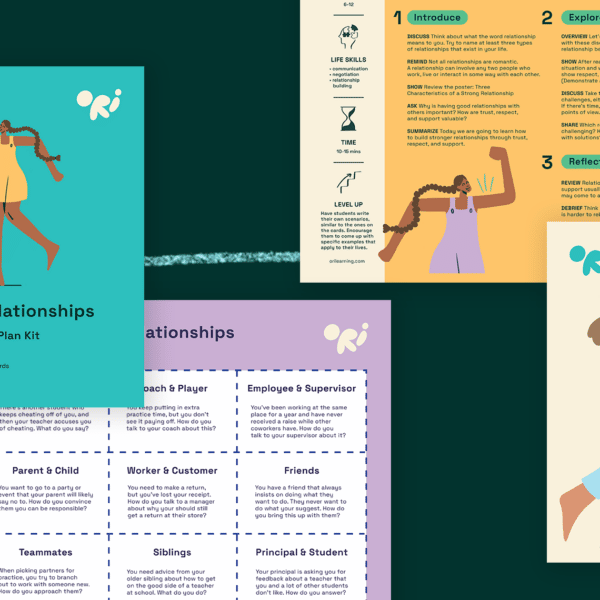
Ori Learning’s Emotional Well-Being Curriculum delivers structured, CASEL-aligned instruction at secondary grades — with the multilingual access and assessment infrastructure California’s frameworks expect, plus the assessment infrastructure districts need for LCAP reporting.
Crosswalk: Ori Learning Units and California SEL Frameworks
District coordinators evaluating programs often ask for a crosswalk showing CASEL alignment and how the curriculum supports California’s broader T-SEL goals. The table below maps each unit to the CASEL competencies and the T-SEL dimensions the curriculum’s content supports.
| Ori Learning Unit | CASEL Competency | California T-SEL Goals Supported |
|---|---|---|
| Unit 1: Self-Awareness | Self-Awareness | Identity exploration, recognizing how personal experiences shape self-perception, identifying strengths and areas for growth |
| Unit 2: Self-Management | Self-Management | Emotional regulation, goal-setting, stress management, developing agency and resilience |
| Unit 3: Social Awareness | Social Awareness | Perspective-taking across diverse communities, empathy development, appreciating how different backgrounds shape experience |
| Unit 4: Relationship Skills | Relationship Skills | Communication and collaboration across difference, navigating conflict constructively, building belonging in diverse classroom and community settings |
| Unit 5: Responsible Decision-Making | Responsible Decision-Making | Ethical reasoning that considers community impact, collaborative problem-solving, developing personal agency |
In a third-party study following ESSA Level III standards, 1,829 high school students using the curriculum during the 2023–24 school year showed statistically significant gains: students who completed all 25 lessons scored 11% higher on emotional well-being measures than those completing only five (Hunt & Styers, 2025). For California districts reporting on LCAP Priorities 5 and 6, this dose-response evidence connects SEL instruction directly to measurable student outcomes.
Built for California’s Priorities
The curriculum delivers 175 lessons across grades 6–12 (25 per grade, organized into the five units above). For California districts specifically, several capabilities stand out:
- Multilingual access for 1.1 million ELL students: The platform supports translation into over 130 languages, with text-to-speech, speech-to-text, and multiple response modalities (written, audio recording, file upload) so language barriers do not prevent full participation.
- Assessment data for LCAP reporting: Every lesson includes a pre-assessment and post-assessment, generating quantitative evidence of skill development tied to LCAP Priorities 5 and 6. District dashboards aggregate this data across schools and grade levels.
- MTSS tiered delivery: Three delivery modes — Front of Class (no devices needed), Live Participation (teacher-paced, student devices), and Self-Paced (independent work) — support Tier 1 universal instruction, Tier 2 small-group intervention, and Tier 3 individual counseling use cases within a single platform.
- Accessibility and accommodations: Content addresses identity, belonging, and perspective-taking — foundational dimensions of California’s T-SEL goals. Built-in accommodations support students with IEPs and 504 plans through flexible pacing, multiple response options, and accessible design.
Integration with Google SSO, Microsoft SSO, Clever, and ClassLink means deployment does not require a separate credentialing process — a practical consideration for large California districts managing complex identity systems.
California Implementation Use Cases
Advisory and Homeroom
Front of Class mode fits naturally into 20–30 minute advisory blocks. Teachers can facilitate a single lesson without student devices, using the built-in lesson plans — 348 total across all courses — as a structured facilitation guide rather than expecting teachers to improvise in an unfamiliar content area.
Health Education and SB 224 Compliance
The 2019 Health Education Framework includes “Mental, Emotional, and Social Health” as a content area, and SB 224 mandates mental health instruction at secondary grades. Districts can use Ori Learning’s curriculum to address both requirements simultaneously. Live Participation and Self-Paced modes work well in dedicated health class periods where students have device access.
MTSS, Counseling, and Student Support
Self-Paced mode supports Tier 2 and Tier 3 intervention use cases — counselors and student support staff can assign targeted lessons to individual students or small groups. Built-in pre- and post-assessment data helps identify students who may need more intensive support, connecting SEL instruction to the broader MTSS framework.
Evaluating SEL Programs for California Secondary Schools
Real Secondary Scope and Sequence
A California SEL curriculum for secondary grades should have dedicated, grade-specific content for each year from 6th through 12th — not a single course repurposed across age groups. For a full evaluation framework, see our guide to choosing an SEL curriculum with a step-by-step buyer’s checklist. Look for developmental progression: what a 7th grader explores around emotional identification should differ meaningfully from what a 12th grader encounters around identity and agency.
Transformative SEL and California’s Direction
California’s T-SEL framework builds on the CASEL five by adding dimensions around identity, belonging, and social context. Evaluate whether a curriculum provides a strong CASEL foundation — identity exploration, perspective-taking, empathy, collaborative problem-solving — that supports T-SEL goals. Programs grounded in these competencies position districts to extend into T-SEL’s broader dimensions as implementation deepens.
Standards and Framework Alignment
District leaders comparing SEL programs California schools use often look for alignment to CDE SEL guidance, CASEL competencies, and the Health Education Framework’s social-emotional content expectations. Programs that map clearly to these frameworks simplify LCAP planning and strengthen funding justification.
Equity, Access, and Multilingual Support
Given California’s diverse student population, evaluate whether a curriculum provides genuine multilingual access — not just translated handouts, but full platform translation, text-to-speech, speech-to-text, and multiple response modalities. Programs should also support students with IEPs and 504 plans through built-in accommodations and flexible pacing options.
Assessment That Supports LCAP Reporting
With Priorities 5 and 6 requiring evidence of student engagement and school climate improvement, choose a curriculum with built-in pre- and post-assessments that measure skill development — not just lesson completion. Data should aggregate at the school and district level to support California School Dashboard reporting and LCAP narratives.
Frequently Asked Questions About California SEL
What are California’s Transformative SEL Competencies?
California’s Transformative SEL Competencies build on the five CASEL competencies — self-awareness, self-management, social awareness, relationship skills, and responsible decision-making — while adding an equity and social justice lens. They ask students to examine identity, belonging, agency, and collaborative problem-solving alongside individual skill development.
Does California mandate SEL instruction?
California does not mandate a standalone SEL course. However, SB 224 (2021) mandates mental health instruction in middle and high school health courses, covering protective factors that overlap significantly with SEL competencies. The CDE also embeds social-emotional expectations in the 2019 Health Education Framework and the MTSS model.
How can California districts fund an SEL curriculum?
The most sustainable source is LCFF (Supplemental and Concentration grants), which provides broad flexibility. Additional options include the LREBG ($6.8 billion, explicit SEL eligibility through 2027–28), CCSPP community schools grants (through 2031), CYBHI capacity grants, and federal Title IV-A. Districts typically combine two or more sources to cover curriculum licensing, training, and implementation support.
How does SEL connect to California’s LCAP priorities?
LCAP Priority 5 (Pupil Engagement) and Priority 6 (School Climate) are the primary connections. Districts document SEL goals, actions, and expenditures in their LCAPs and report outcomes through the California School Dashboard local indicators, particularly the school climate self-reflection tool.
What should a California SEL curriculum include for middle and high school?
Grade-specific content with developmental progression, support for California’s Transformative SEL goals, multilingual access for ELL populations, flexible delivery modes that fit advisory or health class schedules, and built-in assessments that generate measurable outcome data for LCAP and Dashboard reporting.
Can SEL be taught in advisory, health, or integrated settings?
Yes. Effective California SEL programs offer multiple delivery modes so districts can implement in advisory blocks, dedicated health periods, intervention time, counseling sessions, or independent study — without requiring a standalone course addition. This flexibility is especially important for districts using SB 224 health course time for mental health instruction.
How does California’s MTSS framework relate to SEL curriculum?
The CDE positions SEL as a Tier 1 universal support within the MTSS framework. An SEL curriculum with built-in assessment provides the Tier 1 instruction layer and generates the data MTSS teams need to identify students for Tier 2 or Tier 3 — one system instead of siloed programs.
California district teams evaluating secondary SEL options can review Ori Learning’s Emotional Well-Being Curriculum to see how it aligns with Transformative SEL and LCAP priorities, or request a product walkthrough tailored to your district’s implementation context. You can also see how New York structures SEL within its layered policy framework.