
Adult Transition Curriculum (Ages 18+)
A functional, Pre‑ETS–aligned curriculum designed for adult transition programs—helping learners apply skills for work, independent living, and community participation.

60 Lessons · 6 Units · Ages 18–22+ · Pre-ETS Aligned · 3-Tier Differentiation · Pre/Post Assessment
Built for 18–22+ Transition Programs
Ori Learning’s adult transition curriculum is designed specifically for post-secondary transition programs serving young adults with disabilities. Whether you run an 18–22 program, community-based instruction, or Project SEARCH-style model, this curriculum provides structured, age-appropriate lessons that respect the maturity and goals of adult learners.
- 18–22 transition programs
- Post-secondary special education classrooms
- Community-based instruction (CBI) programs
- Life skills and independent living programs
- Pre-ETS service providers
- Vocational rehabilitation partnerships
Adult Transition Curriculum Across 6 Core Domains
Six units (10 lessons each) focused on the skills adults use every day—in real settings.
REAL-WORLD SKILLS LEARNERS PRACTICE:
Self-Determination
Learners build self‑awareness and confidence by exploring personal interests, strengths, and values. They practice setting concrete goals, making informed choices, and participating actively in their own planning.
Instruction strengthens self‑advocacy by teaching learners how to communicate needs, request accommodations, and understand rights related to work, housing, and disability—building the skills needed for independent, self‑directed adult life.
Independent Living
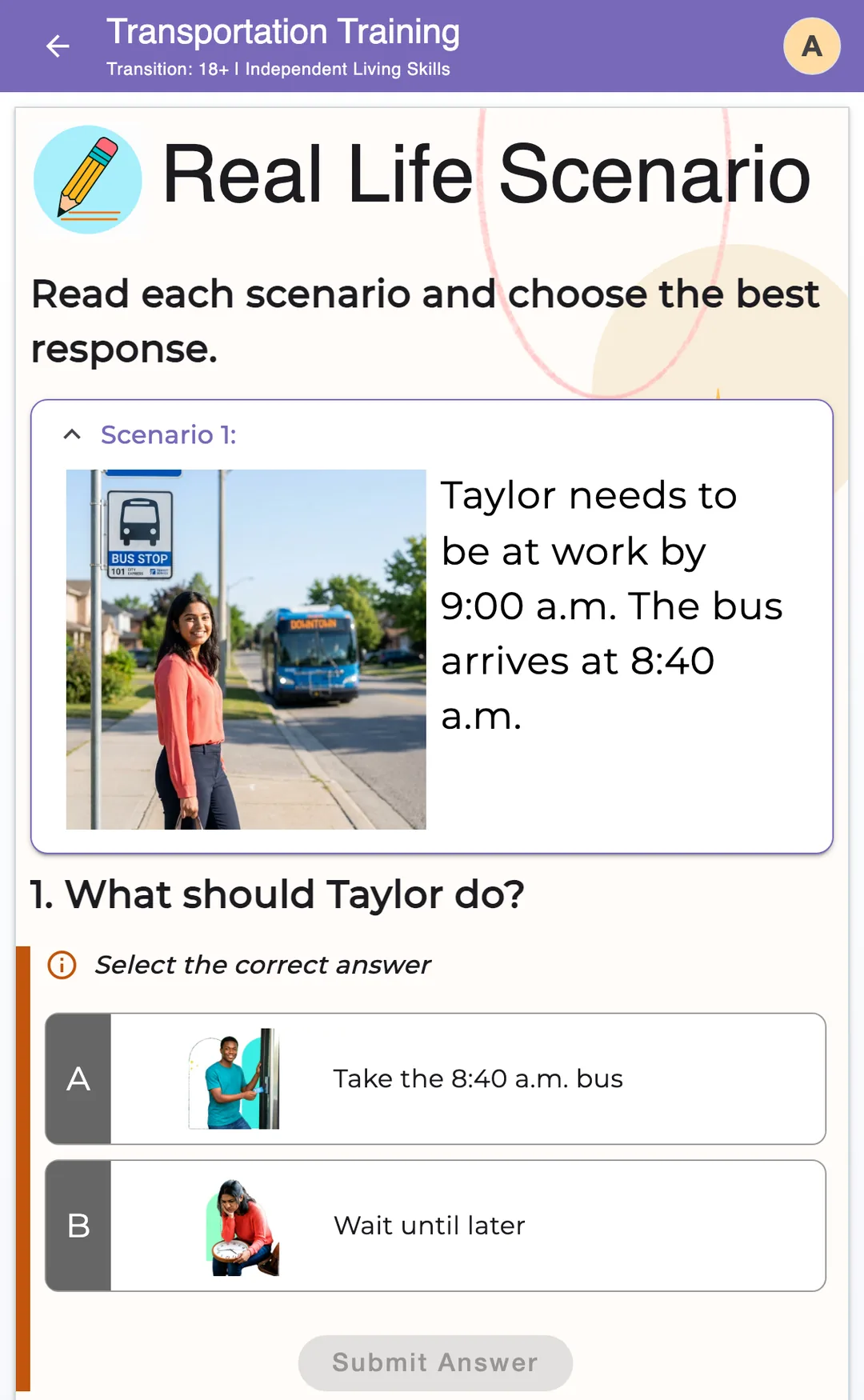
Learners master routines required for daily independence, including personal grooming, clothing care, and household management. They build confidence navigating the community through transportation training and practical budgeting.
Instruction also covers meal preparation, safety, and emergency preparedness—supporting learners as they manage their day, their responsibilities, and their living space with increasing independence.
Employment Skills
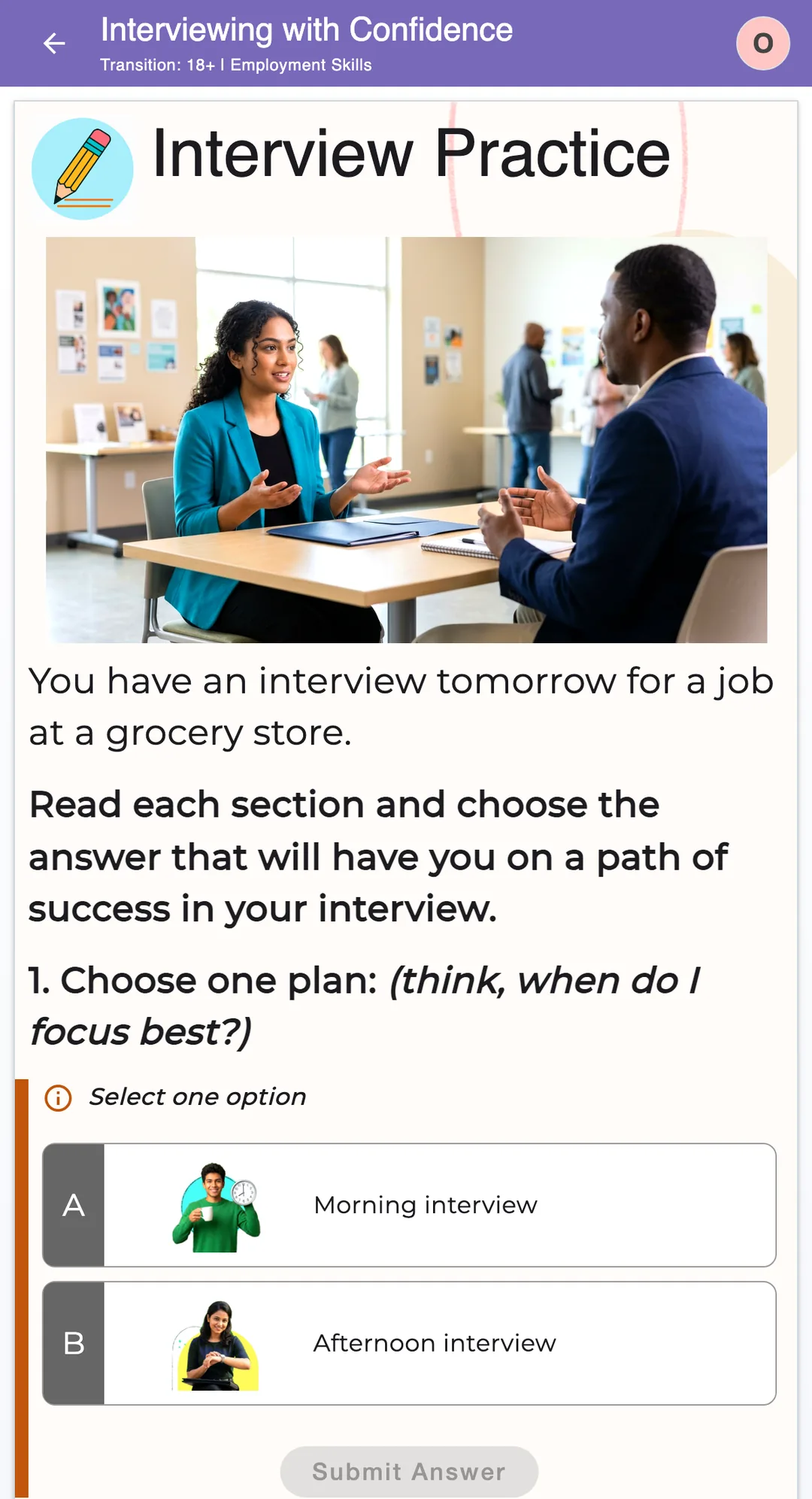
Learners explore careers that match strengths and interests and practice the full job search process—from job search strategies and résumé building to applications and interview practice.
The unit emphasizes essential workplace behaviors such as reliability, communication, work ethic, and safety—helping learners understand what it takes to find meaningful employment and succeed on the job.
Education & Training
Learners develop practical strategies for lifelong learning—organization, time management, and using technology responsibly. They strengthen everyday academic skills used in adult life, like reading schedules, following directions, and problem‑solving when they’re stuck.
They also explore training pathways (career centers, technical training, apprenticeships, and community programs) while learning how to use supports and accommodations effectively—so they can navigate education and training environments with greater autonomy.
Social Skills
Learners strengthen connection and communication skills by practicing first impressions, respecting personal boundaries, starting conversations, and handling conflict in real settings.
The unit also addresses navigating complex social situations online and offline, building healthy relationships, understanding empathy, and participating in the community—building social confidence for workplace and personal life.
Health & Wellness
Learners establish a foundation for a healthy lifestyle by building routines for hygiene, nutrition, movement, sleep, and stress management. They learn to recognize and regulate emotions and build safe, healthy relationships.
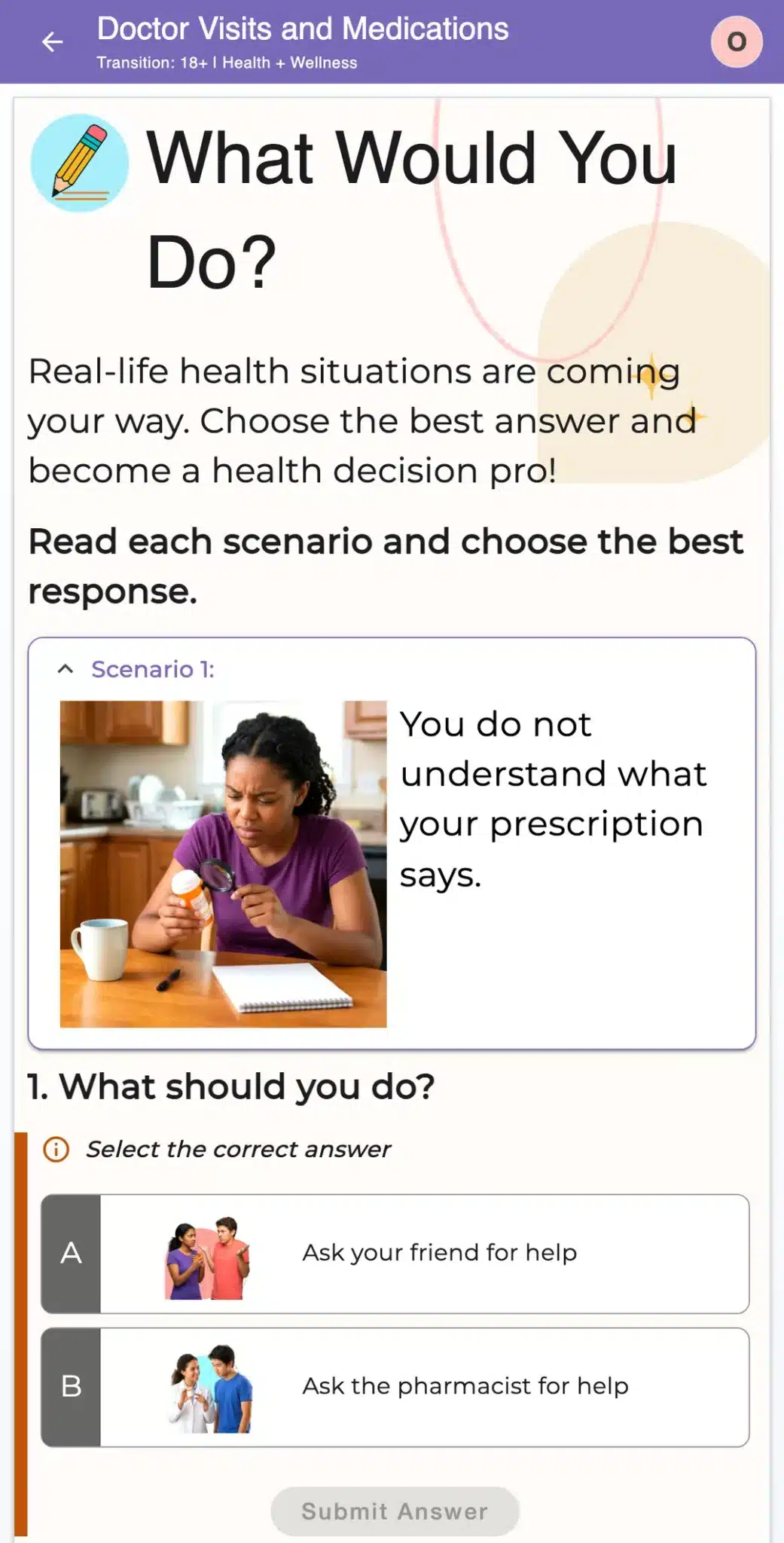
Practical health skills—like making doctor appointments, understanding medications, and knowing what to do in emergencies—support learners in creating a personalized wellness plan for adult independence.
What's Included in the Adult Transition Curriculum
| Unit | Lessons | Skills Students Practice |
|---|---|---|
| Self-Determination (10 lessons) |
Getting to Know Me, My Strengths and Challenges, Setting Goals That Fit Me, Making My Own Choices, Being a Part of My IEP Team, Speaking Up for Myself, Understanding My Rights, Planning for My Future, Self-Reflection and Growth, Celebrating My Independence | Self-awareness, self-advocacy, rights, IEP participation, future planning |
| Education + Training (10 lessons) |
Why School Matters, Getting Organized, Following Directions, Learning Supports, Exploring Job Training Programs, Using Technology to Learn, Everyday Academic Skills, Problem Solving When I’m Stuck, Learning in the Community, Time Management for Life | Organization, technology, community learning, time management |
| Employment Skills (10 lessons) |
My Interests, My Future Job; Understanding What a Job Is; Job Search; Building a Résumé; Applying for Jobs; Job Interviews; Workplace Etiquette; Workplace Communication; Work Ethic; Workplace Safety | Job readiness, applications, interviews, workplace behavior |
| Independent Living (10 lessons) |
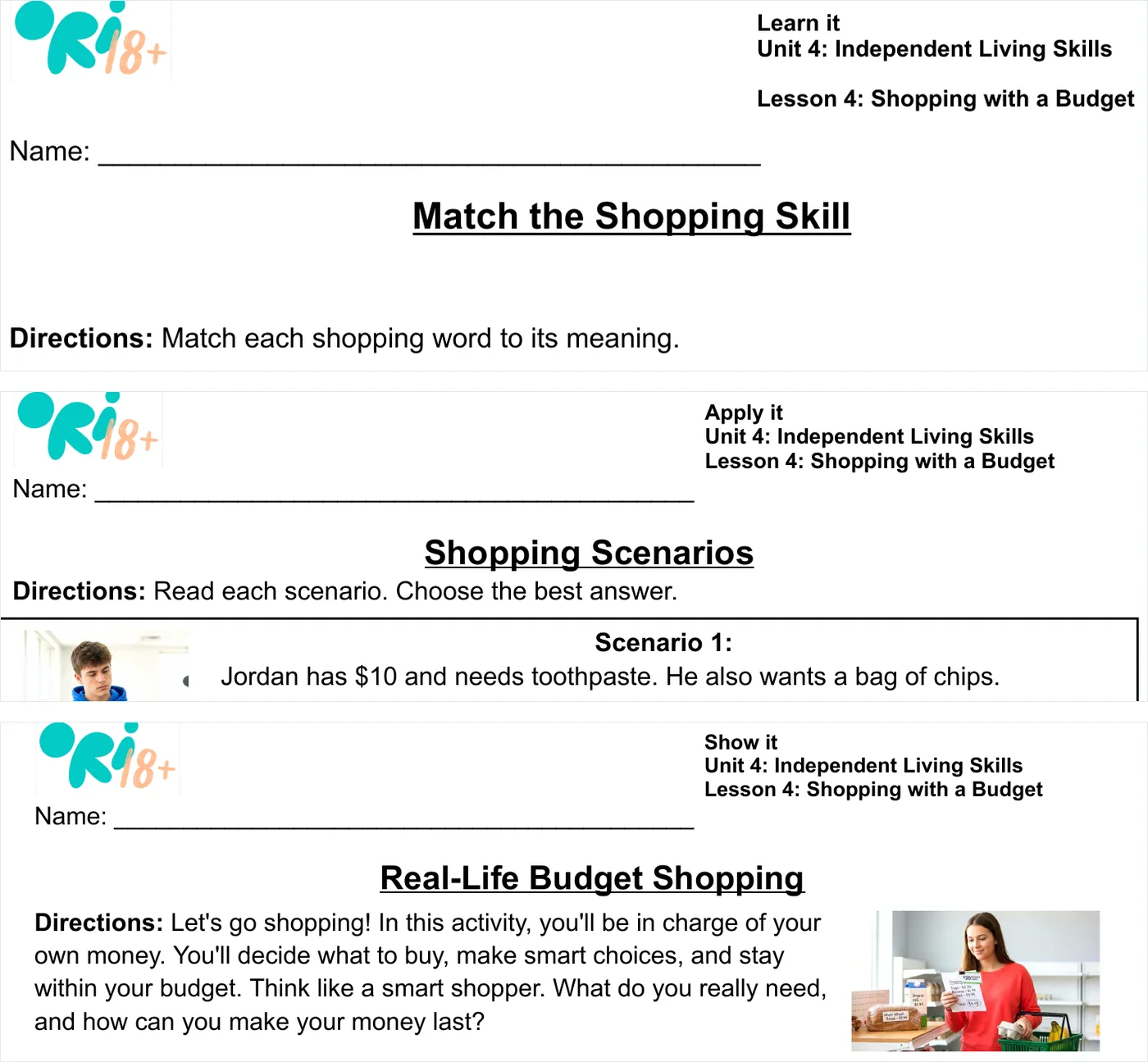
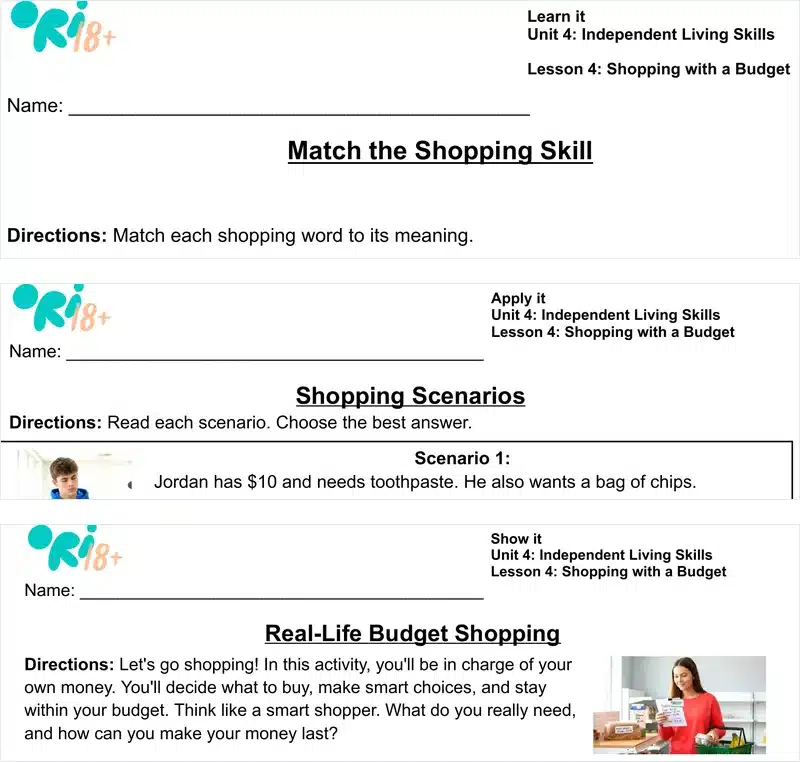
Getting Dressed for the Day, Doing Laundry, Household Management 101, Shopping with a Budget, Cooking and Meal Prep, Transportation Training, Apartment Basics, Going to a Restaurant, Emergency Preparedness, Planning My Day | Daily routines, household management, budgeting, transportation, safety |
| Social Skills (10 lessons) |
Making a Good First Impression, Personal Space and Boundaries, Starting Conversations, Handling Conflict, Going Out With Friends, Being a Good Friend, Online Etiquette and Safety, Community Participation, Giving and Receiving Feedback, Leadership and Teamwork | Communication, relationships, conflict resolution, community engagement |
| Health + Wellness (10 lessons) |
Personal Hygiene and Self-Care, Healthy Eating Habits, Exercise and Movement, Sleep and Routines, Managing Stress, Doctor Visits and Medications, Safety and First Aid, Mental Health Awareness, Healthy Relationships, Building a Wellness Plan | Hygiene, nutrition, exercise, stress management, mental health, safety |
Every lesson includes pre/post assessments, 3-tier differentiation, and age-appropriate activities. The curriculum emphasizes self-directed learning with journal reflection and scenario-based practice connecting skills to real-world settings.
Help Adult Learners Take an Active Role in Their IEP
One of the most distinctive features of the adult transition curriculum is its focus on self-advocacy and IEP participation. These lessons don’t just teach about rights — they give learners practice speaking up, preparing for meetings, and planning for their future.
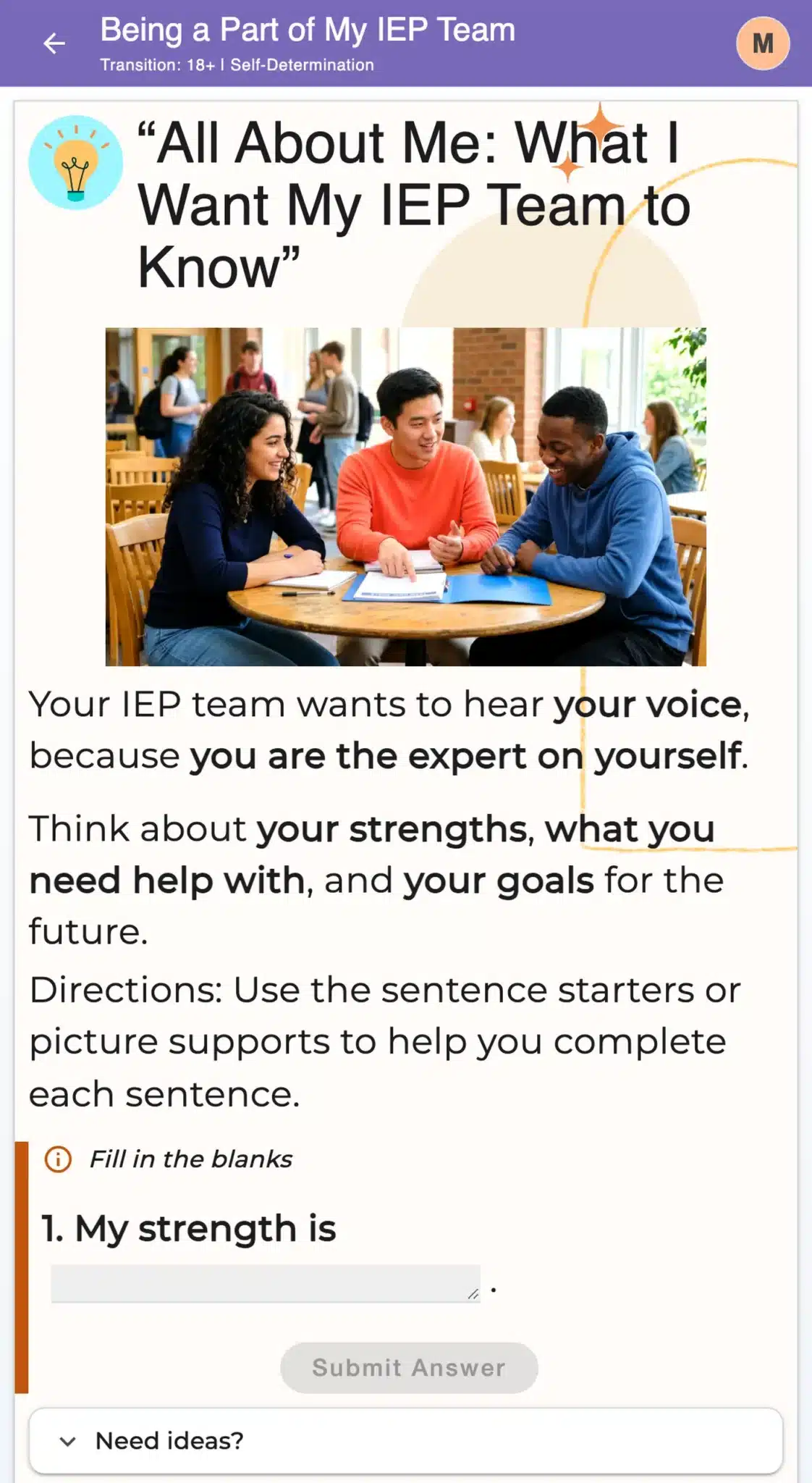
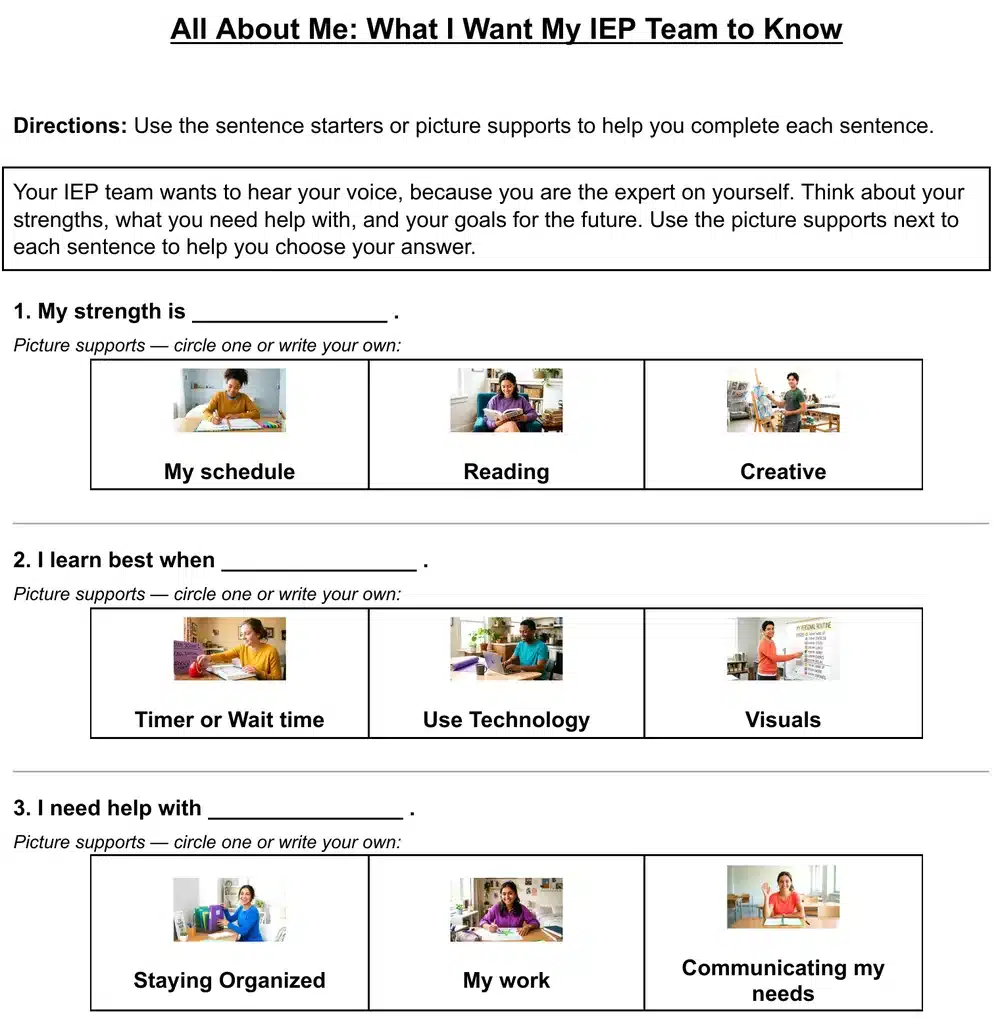
- Being a Part of My IEP Team — Practice preparing for and participating in IEP meetings
- Speaking Up For Myself — Build confidence in self-advocacy across settings
- Understanding My Rights — Learn about disability rights, age of majority, and legal protections
- Planning For My Future — Set goals and create actionable plans for life after school
- Self-Reflection and Growth — Develop self-awareness through guided journal reflection
- Celebrating My Independence — Recognize growth and set new goals
Aligned to Pre-ETS and WIOA Priorities
Ori Learning’s adult transition curriculum maps directly to the five required Pre-Employment Transition Services (Pre-ETS) activities under WIOA, making it easier for programs to document instructional alignment with federal funding requirements.
| Pre-ETS Required Activity | Ori Learning Lessons |
|---|---|
| Job exploration counseling | My Interests, My Future Job; How to Find a Job |
| Work-based learning readiness | Workplace Etiquette; Workplace Communication; Workplace Safety |
| Postsecondary education counseling | Exploring Job Training Programs; Why School Matters |
| Workplace readiness training | Work Ethic; Following Directions; Time Management for Life |
| Self-advocacy instruction | Speaking Up For Myself; Understanding My Rights; Being a Part of My IEP Team |
Use language carefully: this curriculum supports alignment with Pre-ETS and WIOA priorities. Contact us for detailed mapping documentation.
Download the 18+ Transition Scope & Sequence
Review the full unit progression, lesson objectives, and standards alignment for the adult transition curriculum.
Inclusive Instruction for Diverse Learners
Universal Design for Learning
Adult transition programs often serve a mix of learning profiles in a single room. We’ve built supports into the platform to engage students with mild-to-moderate support needs alongside those ready for independent work.
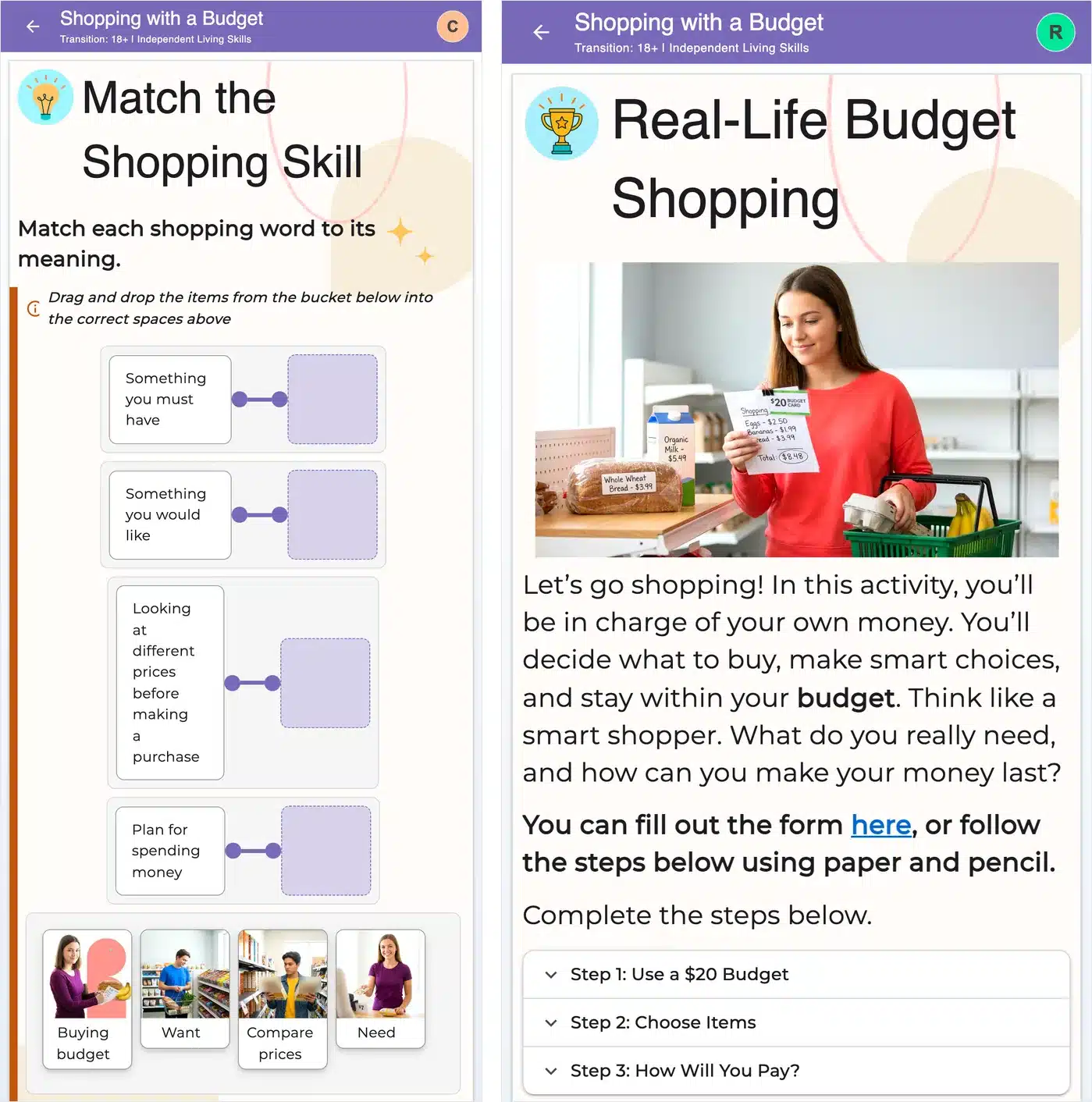
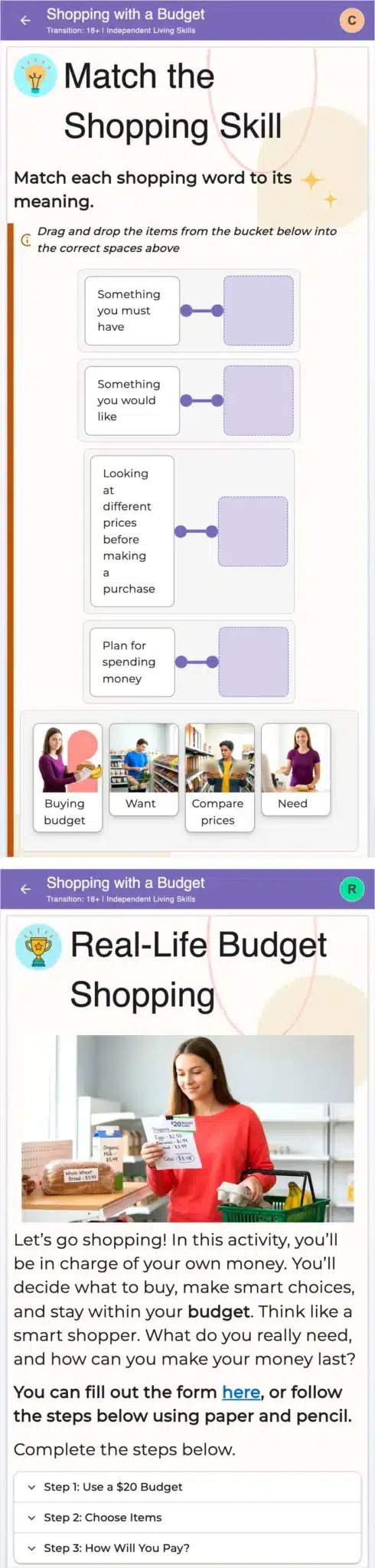
- Leveled Tasks: Foundational, Core, and Extension activities for every lesson to meet students where they are.
- Voice & Choice: Students answer via Text, Audio, or Drawing.
- Accommodations Bar: Integrated text-to-speech and translation for 130+ languages.
Flexible Delivery for Dynamic Programs
FOR TEACHERS
Adult transition schedules are rarely static. Whether you have a full group for morning meeting or students rotating in and out from job sites, our platform adapts to the flow of your day.
- 3 Delivery Modes: Instantly switch between Front-of-Class (group instruction), Student-Paced (independent work), or Live Participation (interactive).
- Collaboration Boards: Digital sticky notes for class discussion with moderation controls.
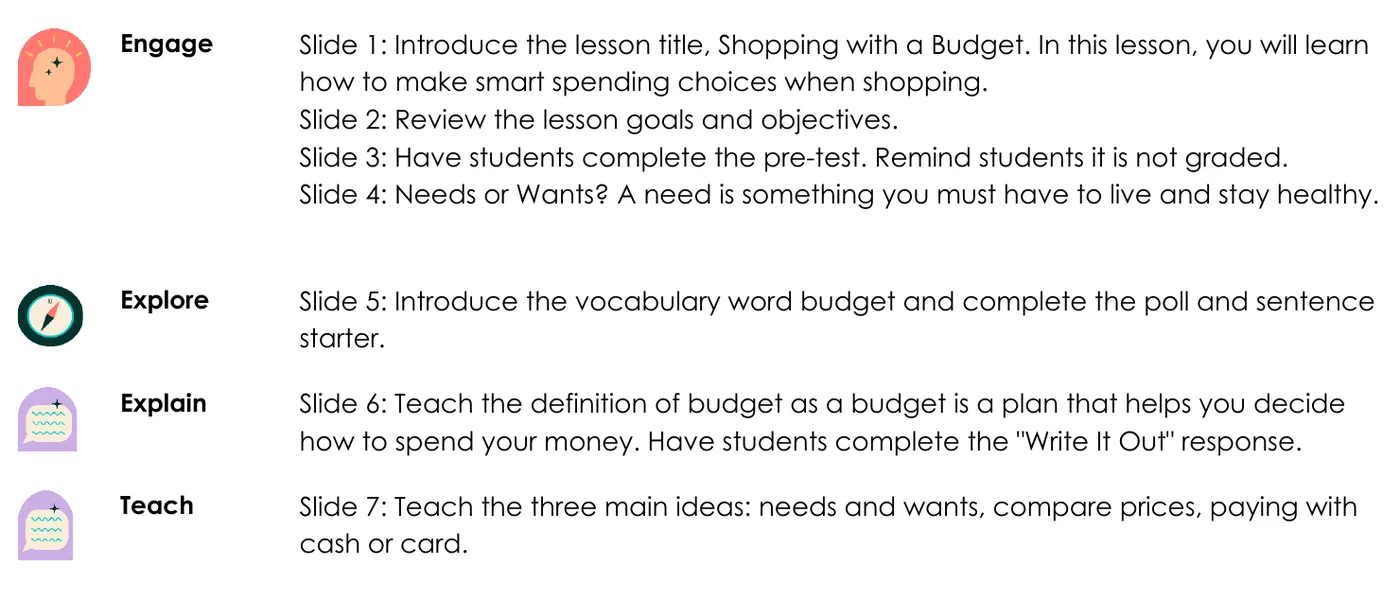
- Zero-Prep Planning: Comprehensive guides include pacing, functional vocabulary, and objectives so you can focus on students, not setup.
Align Instruction to Pre-ETS & WIOA Funding
FOR ADMINISTRATORS
Instruction maps to the five required Pre-ETS activities, and lesson and assessment records support your documentation for Vocational Rehabilitation (VR) and district reporting.
- Aligned to Pre-ETS Categories: Our curriculum domains map directly to the 5 required Pre-Employment Transition Services, which helps when you coordinate with VR.
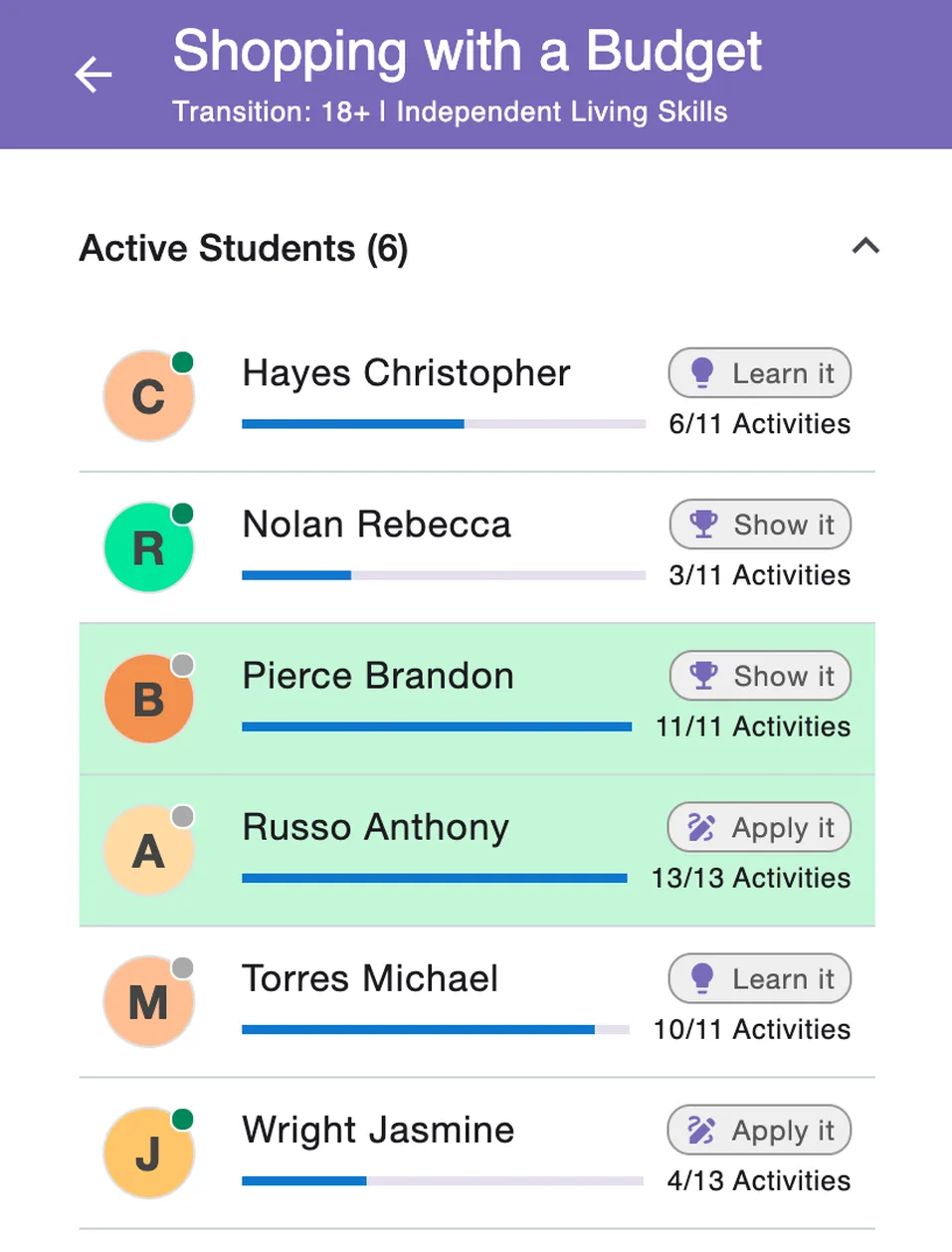
- Track Service Delivery: Automatically log lesson completion to provide evidence that transition services were delivered, not just planned.
- Verifiable Student Data: Timestamped student responses provide a clear audit trail of progress toward post-secondary goals.
-
Consistent Framework: Built on the same 6 Core Domains as our High School Curriculum, ensuring a seamless vertical pathway.
[Learn more about our High School Curriculum]
Frequently Asked Questions About Adult Transition Curriculum
What is an 18–22 adult transition program?
An 18–22 transition program serves young adults with disabilities who continue to receive special education services after high school. These programs focus on developing independence, employment readiness, self-advocacy, and community participation skills. Ori Learning’s adult transition curriculum provides 60 structured lessons across six domains specifically designed for this population.
How does adult transition curriculum align with Pre-ETS and WIOA requirements?
Ori Learning’s curriculum maps to all five required Pre-Employment Transition Services (Pre-ETS) activities under WIOA: job exploration counseling, work-based learning readiness, postsecondary education counseling, workplace readiness training, and self-advocacy instruction. Each unit contains lessons that directly address these federally funded service areas.
How is adult transition curriculum different from high school transition curriculum?
While both curricula share the same six-domain framework, adult transition curriculum emphasizes applied independence and self-direction. 97% of adult lessons include journal reflection (compared to 80% group discussion in high school). Adult lessons focus on IEP participation, community-based skills, and workplace readiness rather than foundational exploration. Learn about the high school transition curriculum.
How do you teach self-advocacy and IEP participation to adult learners with disabilities?
Ori Learning includes dedicated lessons on self-advocacy and IEP participation: “Being a Part of My IEP Team,” “Speaking Up For Myself,” and “Understanding My Rights.” These lessons use scenario-based practice and journal reflection to help learners prepare for real IEP meetings, understand their legal rights, and communicate their needs and goals effectively.
Can this curriculum be used in community-based instruction settings?
Yes. The flexible delivery model allows lessons to be used in classroom settings, community-based instruction (CBI), job coaching contexts, and small-group or independent work. Lessons on transportation, workplace communication, and community resources are designed to transfer directly to real-world environments.
How can adult transition programs document progress toward IEP transition goals?
Every lesson includes pre/post assessments that measure skill growth over time. Assessment data can be used to document progress toward measurable postsecondary goals in the student’s IEP, support transition planning conversations, and demonstrate program effectiveness to administrators and funding agencies.
Curriculum designed by Tess Hileman, M.Ed. and Dr. Miriam Gayle, EdD — bringing decades of experience in special education, transition planning, and curriculum development to every lesson.
A Continuation of the Secondary Journey
Our Adult track is the final stage of a vertically aligned pathway. See how our High School Transition Curriculum builds the foundation, or download the full Scope & Sequence to review the complete framework.